“I’ve always loved cooking—my mom cooked a lot—so my cocktails became memories in liquid form.”
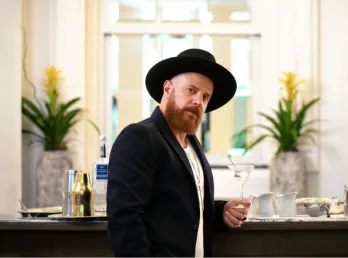
Zaylan: Emanuele, we’re excited to talk to you today. Where are you calling in from?
Emanuele: From sunny Tenerife—just off the coast of Morocco, but still Spain.
Zaylan: We’re going to go through a bunch of questions—get to know you, learn more about your background, Ellis Adams Group EMEA, and the great work you’re doing on that side of the world.
Let’s start with some warm-up questions. Where did you grow up, and where’s home now?
Emanuele: I grew up in a little village outside of Rome called Marino—beautiful hills, lots of grapes, and the oldest wine festival in Italy. This year it turns 100. During the festival, the whole town gives out wine for free. That’s probably why I ended up in the beverage world.
Zaylan: Love it. And your favourite food and drink?
Emanuele: Anything made with love. Lately, I eat a lot of Asian food... I love that mix of flavours. Spanish and Caribbean too, Mexican, Latin American, lots of spice and freshness.
Zaylan: Favourite hotel you’ve stayed in?
Emanuele: W Rome. It was home for three months during the opening, and I really enjoyed it.
Zaylan: And a favourite travel destination?
Emanuele: Definitely Thailand.
Zaylan: What’s on your dream list?
Emanuele: I’ve heard the Ritz-Carlton in New York is incredible, but there are so many places I still want to see.
Zaylan: Favourite book?
Emanuele: Setting the Table by Danny Meyer. It’s about how he started in hospitality, fell in love with it, and turned it into a lifestyle.
Zaylan: You’ve been in hospitality for over 20 years. Do you remember when it became more than a job—what really hooked you?
Emanuele: When I quit university. I was studying physical therapy but bartending on the side. Around 22 or 23, I decided to switch completely. Then I moved to London—not speaking a word of English—and started as a barback. I don’t miss a single moment of that time.
Zaylan: So your first bartending job in an English-speaking country, and you didn’t speak English?
Emanuele: Not at all. I was actually a bar manager in Italy, but in London I was back to basics. People would ask, “Where’s the loo?” and I’d answer, “Gin and tonic?” Or, “Can I get a TISSUE?”—still “Gin and tonic?” I learned English behind the bar.
Zaylan: And when did you move from bartending to mixology?
Emanuele: I’ve always loved that side—even before it was called mixology. Back then it was all Long Islands and Sex on the Beaches, but I liked adding my own twist. I’ve always loved cooking—my mom cooked a lot—so my cocktails became memories in liquid form. After learning new techniques and working with Michelin-starred chef friends, I began weaving more of that artistry into the craft.
“La sprezzatura—the art of making something very difficult look simple.”
Zaylan: Wow, I’ve never heard that before—“memories in liquid form.” That’s a great line.
Emanuele: One of my favourites is called Latte Biscotti—milk and biscuits. When I was a kid, before school, my mom would make warm milk with buttery biscuits. The smell drifting through the house was my wake-up call.
As an homage to her, I created a cocktail with Scotch whisky infused with butter, a splash of Frangelico, and a touch of Cointreau for that orange note. I use the blue blazer technique—flaming it in a cup—and serve it with warm milk and a biscuit on the side. For people here, it’s basically a grown-up breakfast.
Zaylan: Incredible. Did you have any mentors as you moved through your career?
Emanuele: No—my biggest judge was myself. Curiosity was my mentor.
Gaby: Let’s talk about W Rome. You created something really special there—hospitality that’s playful, bold, and inspired by La Dolce Vita. How did you capture that energy in the hotel’s bars?
Emanuele: That’s one of the main reasons I took the job—to revive that Dolce Vita spirit. In Rome, and really in Italy overall, there were no LUXURY lifestyle hotels—everything was still classic. In the interview I told them, “If you want me, I do this full-scale. No middle ground.”
The mission was to bring locals back to one of the most beautiful streets in Rome and let them experience high-level hospitality in a relaxed way. In Italy, we call it la sprezzatura—the art of making something very difficult look simple. And we did just that. The team, the GM, the vision—it was all aligned. We brought the spirit of Rome inside the hotel, never said no, and created magic.
Gaby: W Lounge and Otto Rooftop each have their own personality. How do you keep the vibe distinct but connected?
Emanuele: There has to be a feeling—a story behind everything we do. Not for the buzzword “storytelling,” but so people connect to it in an honest way.
Because of my background in physical therapy—and my own cocktail lab—I’m fascinated by herbs. Originally, our job was about preserving life. I built a concept called Perpetual Nature, inspired by the life cycle of plants: roots, leaves, flowers, fruits. Each cocktail represented a stage and used ingredients that were flavorful and beneficial.
The rooftop was a lighter, sparkling version—more playful, almost like a “kindergarten park.” Guests would move between venues, discovering new things each time. It worked because the team was deeply connected to the space, and we loved sharing that connection.
Zaylan: Can you share another example of a cocktail with a story?
Emanuele: One of the first drinks I had was a Cuba Libre—just Coke and lime. I reimagined it as Uba Libre 2.0. I reduced Coke into a spiced syrup, made a sorbet with lime, thyme, and lemongrass, and placed it in the glass with crushed ice, rum, soda water, and two pipettes of the Coke reduction. Guests could control the Coke flavor, and as the sorbet melted, new flavours emerged—lime, thyme, complexity. It was a drink that evolved as you drank it.
Zaylan: And when you design a full menu, how do you tell a bigger story across multiple drinks?
Emanuele: I start with a flavours memory, not a recipe. Then I deconstruct it into ingredients, production methods, and techniques. I look for the emotional “colour” that ties the menu together.
If it’s Mexican, for example, I explore traditions, cultural references, local ingredients. One drink was tequila infused with roasted corn, corn syrup, and corn soda—corn in three ways, layered for flavour. A touch of IPA on top added texture. It’s like plating in a Michelin-starred restaurant—taking one ingredient and expressing it in multiple forms.
“The magic happens when you bring hotel standards into a street bar—and the energy of a street bar into a hotel.”
Zaylan: Are there any Roman or Italian cultural references that always find their way into your work?
Emanuele: Not always. Italy has a long tradition of Amari, vermouths, and herbal liqueurs, but I like to work with whatever is local—wherever I am. If I’m in Kenya, for example, I look for ingredients that grow in that terroir. I want guests to taste the place, to feel its culture in the glass.
Gaby: Ok Let’s get a bit into leadership, innovation, and guest experience. What’s different about managing a hotel bar versus an independent venue?
Emanuele: For me, there’s no difference. I’ve gone from the streets to hotels and back again. It’s about inspiring people—team and guests—while staying true to yourself. Never compromise on quality or professionalism. The magic happens when you bring hotel standards into a street bar—and the energy of a street bar into a hotel. That’s the perfect cocktail.
Gaby: How do you mentor teams to create exceptional experiences, not just great drinks?
Emanuele: That’s an everyday job. Culture has to be built minute by minute. Once your team understands the why behind your vision, everything becomes easier.
It’s in the details: active listening, anticipating needs before they’re spoken. I often ask, “How are you feeling today?” because that feeling can guide the drink I make. That moment of empathy—creating trust in seconds—can turn into a lasting memory.
I lead by example, but I want my team to perform in their own style. We’re all actors in our own theatre. Individuality is key.
Gaby: And the future of hospitality—what do you see?
Emanuele: Two parts: yes, more tech. But eventually we’ll swing back to empathy. Without people, there’s no hospitality.
I don’t see compromise as a weakness. To me, it means sharing a moment, a bit of yourself—whether through a drink, a conversation, or a gesture. That’s the essence of hospitality: connecting with someone else’s experience.
Zaylan: Do you have a recent example of that in action with the EMEA team?
Emanuele: Yes—our recent project in Bahrain. Different cultures, styles, backgrounds. On day one, during role plays, the mostly Indian team was shy and mechanical. By day three, we were laughing, having fun, and they began creating genuine guest experiences for each other.
They saw me do it, but made it their own. They stopped following a script and started performing their own stories. That shift—that ownership—is key.
Today, I got a message from the F&B director thanking me. The team is embracing the culture. Once people connect to it, guest experience becomes second nature.
I always tell them—imagine your mom is hosting a guest for dinner. You open the door, take their coat, set the mood. That’s hospitality. Bring your own warmth, your own upbringing, and you’ll create something unforgettable.
“Hospitality is an energetic exchange.”
Zaylan: If there’s a bartender or server listening—someone who wants to break out of their shell and go from just showing up to performing—what’s your advice? Especially if they don’t have role plays or structured training?
Emanuele: The mental shift is simple—but hard. We live in structure, and we tend to pile more structure on top. My take: less is more. Disrupt what you think you know. Strip it back. Then rebuild your foundation.
Hospitality starts with awareness. Every time you go out—to a bar, restaurant, hotel—you’re having an experience. If you’re truly aware of what’s happening, you’ll process it differently. Take notes—mentally or on paper. Back at your own bar, reflect: if something you saw was bad, don’t repeat it. If it was good, test it, share it, improve it. That process never ends.
Zaylan: And for you—where do you go when you need to clear your head or spark creativity?
Emanuele: Traveling, for sure. But also, familiar places—neighbourhood pubs, small restaurants. They ground me. From there, I can look at things in their raw, primary form. That clarity lets me rebuild something new. Start simple, then layer on the flair.
Zaylan: If you weren’t in hospitality or mixology, what creative path would you take?
Emanuele: I’d go back to being a physical therapist. That work is also about energy and emotional connection. Touch is one of the most powerful forms of communication—the skin has so many receptors, it’s a true exchange of energy. Hospitality is the same. Every guest interaction is an energetic exchange.
Zaylan: What’s the best compliment you’ve ever received—about the experience, not the drink?
Emanuele: My first hotel job in London. I’d been there eight months, barely spoke English when I arrived. The Ministry of Defence was a client, and one day Mr. Fox asked where I was from. When I said “Rome,” he was shocked.
“I thought you were from here—you don’t have an accent. You must’ve been here five years.”
When I told him the truth, he said, “Thank you for embracing our culture, for pushing yourself to understand our language and way of life—and for making it your own, your beautiful path.” That was the best compliment I’ve ever had.
Zaylan: So immersion is the only way?
Emanuele: It’s the only way. You can’t give the same service everywhere. Every team is made of people from different cultural experiences. If you just copy-paste a system, it eventually stops making sense—like a painting touched up too many times until it’s no longer there.
For me, creativity and purpose go hand in hand. And curiosity is the key to everything. Without curiosity, we wouldn’t travel. And even if we did, without it, the experience would mean nothing.
“We can help revolutionize hospitality—make it more organic, more human, more empathetic.”
Gaby: It’s interesting hearing you link physiotherapy and cocktail-making—I’d never have made that connection.
You recently moved from leading beverage innovation at W Rome to becoming a partner at Ellis Adams Group. What drew you to the company, and how do you see this next chapter expanding your impact?
Emanuele: What drew me in was—like someone else on the team says—a holistic process.
I met Chris, Maricela, and Kenney in 2022 or 2023 during my first Marriott opening task force in Pylos, Greece, at Costa Navarino. Right away, we clicked. That doesn’t usually happen on these projects, but with them, it did.
We stayed in touch, worked on more openings together, and became close friends. I’ve never had a mentor, but I look up to Chris—he embodies values I’ve always had, even before I could name them.
When I first learned about The Pink Elephant—that psychological, emotional side of hospitality—it all clicked. I realized I’d been living it without having the words for it. From then on, the path was clear. We kept saying, “We need to do something together,” and that became EAG EMEA. But I don’t see it as just a new chapter—it’s a family. A professional family full of talent and heart.
If we keep putting in our 120%, I believe we can help revolutionize hospitality—make it more organic, more human, more empathetic.
Gaby: And what does the EMEA team actually do?
Emanuele: A lot—and we brainstorm constantly. Right now it’s just the four of us, so we reset every day, asking: How can we do this differently? How do we make it better? How do we critique ourselves in a positive way?
We cover hospitality from 360 degrees: developing projects, creating concepts, designing beverage menus, training teams—whatever a hotel needs, we’re there to elevate the experience. We each know our strengths and limits, but we all jump in on every project. We rely on each other because we trust each other.
Gaby: EAG is known for creating experiences that tell a story. How does your mixology background add to that?
Emanuele: That’s probably why we connected so strongly. I still think of myself as a bartender. It’s always about telling stories—when a guest sits in front of you, you let them travel through your experiences.
My grandma—she’s 96—can’t make the best Negroni, but she’s a better host than most bartenders I know. Because she tells stories while she’s serving. It’s not about the drink. It’s about what the drink makes people feel.
Gaby: You’re stepping into bigger leadership and strategy roles now. What’s your vision for building relationships?
Emanuele: Relationships are everything—and they have to be genuine. You can’t fake it.
When I was younger, I chased every project. Now, I let the right ones come to me and filter carefully. That way, you choose better, create deeper impact, and leave a real fingerprint on the next generation.
I love Inception and The Matrix. In Inception, when you plant a seed in someone’s mind, you have a responsibility. If it’s real, it will grow. Years later, someone might say, “Emanuele, I didn’t understand you then—maybe I didn’t even like you—but thank you.” That’s the goal.
Gaby: Hospitality is evolving quickly. What trends excite you most?
Emanuele: Beverage is at a peak right now, and personally, I want a return to basics—that’s where the future lies.
At the same time, I’ve grown to love tech, especially NiteCapp. I wasn’t a fan at first, but now I see it’s a new generation of training—user-friendly and accessible. When I started, we had 56kbps internet. Watching a bartender on the other side of the world was nearly impossible. Now it’s in your hand.
The key is using tech with intention. If we use it consciously to reach and connect, that’s beautiful.
“I got three completely different Negronis—different mouthfeel, different sensations—just by changing the vessel.”
Zaylan: Let’s talk about Drink It. What were the early days like, and how did the concept come about?
Emanuele: The idea started in 2015—long before COVID or the boom in pre-batched cocktails. I was deep into studying natural wine, especially Georgian wine aged in amphorae. I wondered, What if I put a Negroni in an amphora? Or a concrete barrel? Or a glass jar?
So I tried it—and got three completely different Negronis. Different mouthfeel, different sensations. From there, I experimented with everything—infusions, coffee tools—and eventually opened a pop-up serving only pre-batched cocktails.
At the time, people thought I was crazy. Back then, a “real” bar had 300–400 bottles on display. If you didn’t, you weren’t taken seriously. But two years later, consulting requests started coming in. I realized Drink It could become my signature—everywhere—without me physically being there.
It took three years to get licensed because there wasn’t a category for this kind of product. I faced constant rejection, but eventually found a loophole and got approval. We started in a 25-square-meter garage. Today, we’re in a 350-square-meter facility—and it already feels small.
Zaylan: And you’re still operating Drink It today?
Emanuele: Yes, and growing in new directions. We began with 100ml bottled cocktails, and now we create hotel minibar versions, custom labels for events, and tailor-made recipes. I think we’re the only company in EMEA producing fresh, ready-to-drink cocktails with real ingredients that last up to 18 months.
Zaylan: Most popular product?
Emanuele: The Negroni. Mine uses six different gins and six bitters, rested for six months in a stainless steel tank—only partially filled to allow slight oxidation. The result is one unified flavours that slowly reveals individual notes, just like a well-aged wine.
Zaylan: Does Drink It connect to your consulting work?
Emanuele: Absolutely. It’s our beverage lab for Ellis Adams Group. If a hotel doesn’t have trained bartenders, I can pre-batch cocktails for them so they can deliver consistent quality. We can design in-room experiences or full beverage programs—at a high level, anywhere.
Zaylan: And for hoteliers in Africa, Europe, or the Middle East—when’s the right time to reach out?
Emanuele: At any stage.
- Early stage—like in our Kenya project, Carto Mas Amara—we design the entire guest experience from A to Z, including bar layout, beverage program, and operational flow.
- Pre-opening—we provide training, opening support, and concept finalization.
- Post-opening—we deliver a “boost”: refresh the program, train the team, and elevate the experience.
Zaylan: Last question—for a 22-year-old bartender starting out, what’s your advice for building a lasting career?
Emanuele: Forget Instagram—and study. Study the classics, the storytelling, the recipes, the techniques. Understand why things are done, not just how.
Try the same cocktail using two different methods and taste the difference. If you can’t make a proper Martini, it doesn’t matter how many creative drinks you know—you haven’t mastered the basics. Without that foundation, you’ll never truly understand cocktail creation.